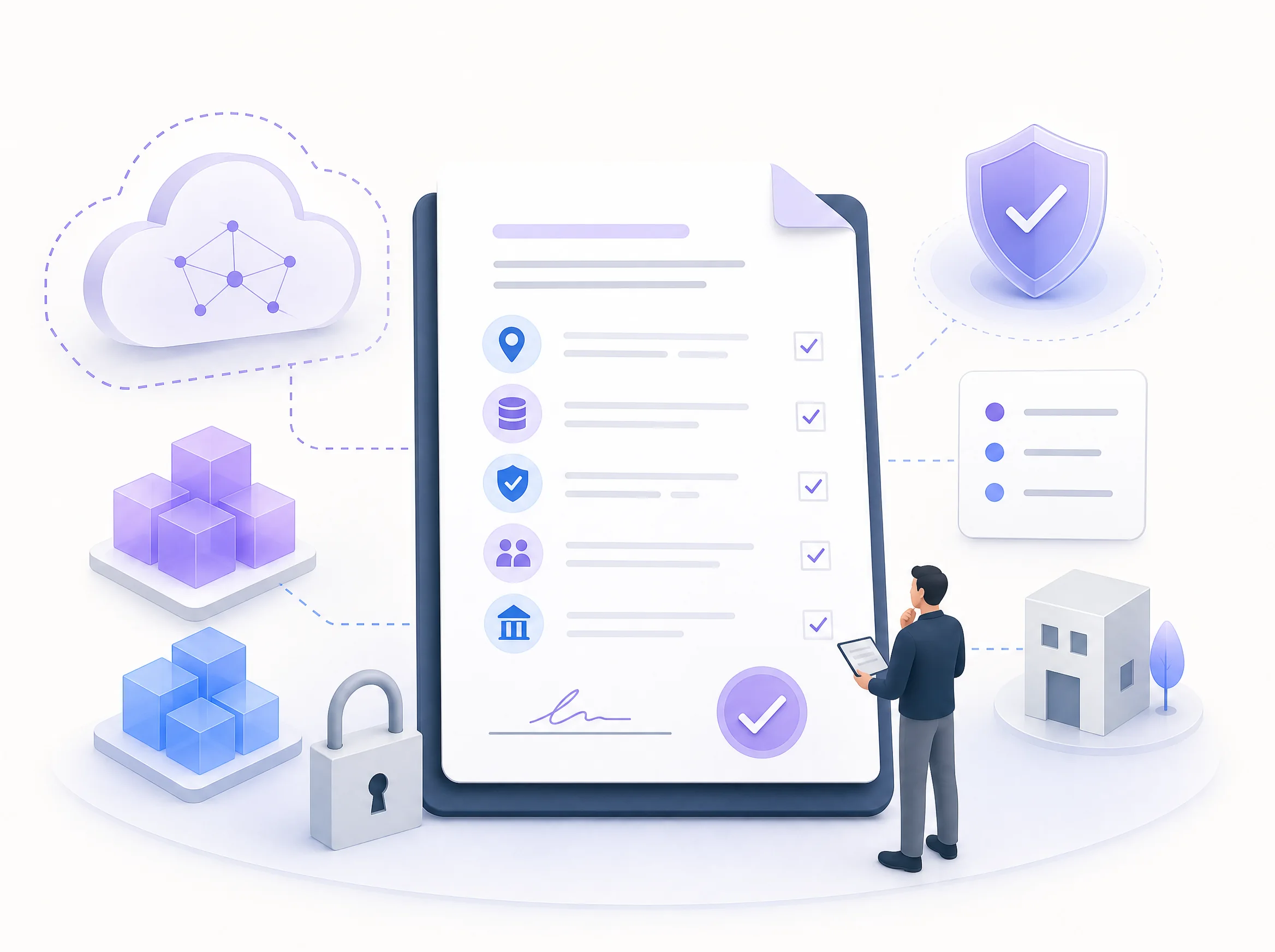
Sovereign AI: What SMEs Should Check Before Signing
Every SME wants to use AI safely. That sounds simple. The reality is more complicated.
A company discovers an AI tool. The demo looks useful, the interface is clean, the price seems acceptable, the provider says it is secure. The team wants to test it quickly. Then the serious questions arrive: where does the data go? Who can access it? Is the model trained on our information? Where are the servers? What happens if we stop the contract? Can we delete our data? Is it GDPR-compliant? Who is responsible if the AI makes a mistake?
These questions matter — especially for SMEs. A large company has legal, security and procurement teams. An SME has fewer resources, which means one bad AI decision can create a lot of risk. Sovereign AI is becoming important because companies do not only want powerful AI; they want AI they can trust, control, audit and explain.
The word “sovereign” is easy to say
Sovereign AI sounds strong: control, privacy, security, European values, independence from big platforms. Those ideas are valuable, but the word itself is not enough. One provider uses “sovereign” because the servers are in Europe; another because the company is European; another because data is not used to train public models; another because it can run in a private cloud. These are not the same thing. An SME should never accept the word as a complete answer — it should ask what exactly is sovereign: the data, the infrastructure, the model, the access control, the legal jurisdiction, the audit trail?
Why SMEs should care
Some think data sovereignty is only for banks or hospitals. That is a mistake. SMEs also handle sensitive information: candidate CVs, client documents, medical appointment requests, legal files, accounting records, contracts, employee data. When an AI agent reads, summarises or classifies that information, the company needs to know how it is handled — especially when AI is connected to daily operations. A chatbot that answers general questions is one thing; an agent that reads internal files and prepares decisions is another level of responsibility.
Where the data lives — and whether it trains the model
The first question is simple: where is our data stored? The answer should be precise — not “in the cloud,” but which country, which cloud provider, whether data moves between regions, whether support teams outside the region can access it, and which subprocessors are involved. The second: is our data used to train any model? Ask whether you can opt out, whether the opt-out is the default, whether it is written in the contract, and whether it applies to prompts, files, outputs and logs. For sensitive use cases, the safest approach is to ensure client data is never used to train public or shared models.
For European SMEs, GDPR is central. CNIL guidance reminds organisations to apply core data-protection principles to AI, and the European Commission presents the AI Act as a risk-based framework for AI deployers. This does not mean every project is high-risk — it means SMEs should ask the basic questions early. Unclear data location is a warning sign.
Access, mistakes, and human review
Even if the data is stored in the right place, you still need to know who can see it. Access control should be clear: who inside the company can use the agent, can users see only what they are allowed to, can the provider or support access the workspace, is access logged and revocable. This is critical for internal agents — poorly designed permissions can turn an assistant into a data leak.
AI systems also make mistakes: they misunderstand, omit context, sound confident when uncertain. A serious provider does not pretend otherwise. Ask whether the agent can show sources, flag uncertainty, require approval for sensitive outputs, log errors, and block high-risk actions. NIST's AI Risk Management Framework makes the point simply: risk controls should be part of the system, not added after people start using it.
Industry fit, documentation, and the exit
Sovereignty is not only technical — it is operational. A provider can offer secure infrastructure and still misunderstand your business. Recruitment AI needs fairness and traceability; medical AI needs privacy and escalation; legal AI needs source visibility. Ask whether the provider has worked with similar workflows and can adapt to your process. Ask what documentation they deliver: data-processing agreement, subprocessor list, security docs, retention and deletion procedures, audit logs.
Finally, ask how to leave. Can you export your data, prompts and configurations? Can you delete everything after termination? Are there cancellation fees? Vendor lock-in is a real risk — it becomes serious when the agent is connected to daily work. Sovereignty includes the ability to leave cleanly: a good provider explains not only how to start, but how to stop.
What SMEs should avoid
Be careful if a provider uses “sovereign AI” without explaining what it means, cannot say where data is stored, cannot explain whether data is used for training, has unclear subprocessors, offers no data-processing agreement, does not support role-based access, provides no logs, promises perfect accuracy, pushes automation of sensitive decisions, or avoids contract-level commitments. None of these automatically mean the provider is bad — they mean you need more information before signing. AI adoption should move quickly when the risk is understood, and slow down when basic answers are missing.
Where BeLogic fits
At BeLogic, we believe SMEs should use AI agents without losing control over their data, processes or responsibilities. We help define the use case, identify the right data sources, structure the workflow, set human-review points and deploy agents with clear boundaries — for recruitment, HSE, medical offices, accounting, legal teams or real-estate lead handling. The objective is simple: AI should help the business work faster while keeping control where it belongs. Before signing with any provider, ask the hard questions — where is the data, who can access it, what is in the contract, what happens when the AI is wrong, can we leave, can this grow safely. Sovereign AI should give companies confidence — not only during the demo, but during daily use.